
• CENTER OF ARTIFICIAL INTELLIGENCE AND COMPUTATIONAL SCIENCE

Scientific Computing

Artificial Intelligence

Computer Vision

Abous Us

CACTuS is a research and development lab working at the intersection of the elds of machine learning, signal processing, and computer vision. We are particularly interested in optimization, and statistics to develop computationally ecient algorithms; and to understand, build, and integrate neural network models in solving real-world problems in data processing. CACTuS also provides consultancy services to industry in developing intelligent solutions for process management, industrial internet of things (IIoT), and computer vision.

We have successfully developed and deployed our own home-grown intelligent data processing solutions for our industrial partners.CACTuS publishes in top-tier and prestigious venues in signal processing, and machine learning. It provides a unique opportunity for students to develop a research career under the guidance of knowledgeable faculty, senior researchers, and graduate students.

CACTuS provides frequent opportunities to innovate and extend knowledge boundaries, and also apply acquired skills to develop applied industrial solutions on regular basis. This makes CACTuS a unique lab in the country presenting challenging and exciting dimensions both in research and development.

Research

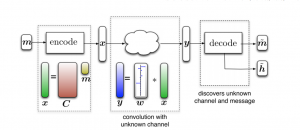
Blind Deconvolution using Convex Programming

Blind Deconvolution using Convex Programming

Blind deconvolution refers to recovering signals by observing only their convolution. Blind deconvolution is a fundamental problem in signal processing, wireless communication, and systems theory.…
Read more
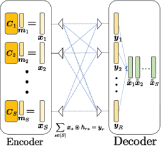
A Convex Approach to Blind MIMO Communications

A Convex Approach to Blind MIMO Communications

This letter considers the blind separation of convolutive mixtures in a multi-in-multi-out (MIMO) communication system. Multiple source signals are transmitted simultaneously over a shared communication…
Read more
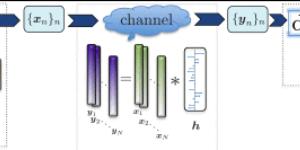
Leveraging Diversity and Sparsity in Blind Deconvolution

Leveraging Diversity and Sparsity in Blind Deconvolution

This paper considers recovering L-dimensional vectors w, and x 1 , x 2 , ? , x N from their circular convolutions y_{n} = w…

Read more

Selected Publications

Blind deconvolution using convex programming

A Ahmed, B Recht, J Romberg ,IEEE Transactions on Information Theory 60 (3), 1711-1732

Inverse Constrained Reinforcement Learning

S Malik, U Anwar, A Aghasi, A Ahmed - International Conference on Machine Learning, 2021

Invertible generative models for inverse problems: mitigating representation error and dataset bias

M Asim, M Daniels, O Leong, A Ahmed, P Hand - International Conference on Machine Learning, 2020

Fundings

  • National Research Program for Universities, HEC. 2017. Advanced Coding Scheme for Wireless Communication in Unknown Environments. (3Million) NRPU, HEC
  • National Research Program for Universities, HEC. 2018. Chemical Testing using Spectroscopy and AI (7Million) NRPU, HEC
  • National Center Grant, HEC. 2019. Cyber Security and AI. (10Million)